Storms, strong winds and heavy rain can place significant loads on trees. While no tree can be completely storm-proof, good tree management can help reduce avoidable risks and identify problems before severe weather arrives.
The best preparation usually happens well before a storm is forecast.
Healthy trees, sound structure and an undisturbed root system generally provide a better starting point than last-minute pruning or other reactive work.
Here are five practical ways to help prepare trees for storms and severe weather.
One of the most useful steps is to look for changes in the tree’s condition or structure.
Signs that may warrant further assessment include:
The presence of a defect does not automatically mean that a tree is dangerous.
However, recent changes can be significant, especially where a tree is close to houses, roads, playgrounds or other frequently occupied areas.
Appropriate pruning can sometimes reduce specific structural concerns, but trees should not be pruned simply because a storm is expected.
Pruning should have a clear objective.
This may include removing a defective branch, reducing excessive end weight from a particular limb or managing a structural issue identified during an arboricultural assessment.
Good pruning should retain as much healthy foliage as practical while addressing the identified concern.
Excessive canopy thinning or removing large amounts of healthy foliage can alter the tree’s structure and does not automatically make it safer in strong winds.
Where pruning is required, a suitably qualified arborist should determine the appropriate method and extent.
Tree roots play a critical role in stability.
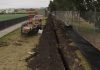
Excavation, trenching, soil compaction, construction activity and changes in ground level can damage roots or alter the soil conditions that support them.
These impacts can become particularly important during storms, when saturated soils and increased wind loading place additional demands on the root system.
Avoid unnecessary excavation and vehicle movement around established trees.
Where construction or landscaping works need to occur near important trees, arboricultural advice can help identify suitable protection measures.
Healthy trees generally respond better to environmental stress than trees already suffering from significant decline.
Good tree management can include:
Mulch can help moderate soil conditions and retain moisture. Keep it clear of the trunk rather than piling it against the base of the tree.
Young trees may also require additional attention while establishing their root systems.
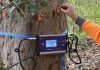
Some structural issues are difficult to assess without arboricultural experience.
A professional assessment can help determine whether a visible feature actually affects tree risk and whether management is required.
An arborist may assess factors such as:
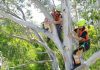
Where an important feature cannot be adequately assessed from the ground, the arborist may recommend further investigation. This could include an aerial inspection, root investigation or specialist decay-detection techniques.
Not automatically.
Last-minute pruning immediately before severe weather may not provide any meaningful benefit unless it addresses a specific problem.
Routine removal of healthy branches, excessive canopy thinning or poorly executed pruning can create unnecessary wounds and alter tree structure.
Where a tree has a known structural concern, appropriate pruning may form part of the management response. The decision should depend on the individual tree rather than a general rule.
Young trees sometimes require staking during establishment, but staking should not be treated as a general storm-preparation measure.
Trees normally need some movement to develop appropriate trunk and root strength.
Where stakes are required, they should allow controlled movement and should not damage or constrict the trunk.
Established trees should not be temporarily tied or anchored before storms without specific professional advice.
After severe weather, check trees for obvious changes.
Look for:
Keep people away from trees that show signs of immediate instability or partially failed branches.
Some storm damage can occur high in the canopy and may be difficult to identify from the ground. Where concerns remain, a professional tree assessment may be appropriate.
No tree can be guaranteed to withstand every storm.
Wind speed, rainfall, soil saturation, tree condition, local exposure and unpredictable loading can all influence how a tree responds during severe weather.
The objective of good tree management is therefore not to make trees “storm-proof”.
It is to identify significant concerns, maintain appropriate growing conditions and apply proportionate management where necessary.
ArbCert’s consulting arborists provide professional tree assessments and risk advice to help property owners, schools, commercial sites and other land managers make informed decisions about tree condition and management.