Can you build near a tree? In many cases, yes.
Having an existing tree close to a proposed house, extension, driveway or other development does not automatically prevent construction. However, the distance between the tree and the proposed works is only one part of the assessment.
A consulting arborist considers the tree itself, its root system, the type of construction and the extent of disturbance proposed around it.
Early arboricultural advice can help identify genuine constraints before they become expensive design problems.
When reviewing a development near existing trees, an arborist will usually consider several factors.
These include:
The aim is not simply to measure the distance between a tree and a building.
Instead, the arborist assesses how the proposed works may affect the tree and whether suitable design or construction methods can manage those impacts.
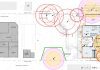
A Tree Protection Zone, or TPZ, is an area around a tree used to guide its protection during development and construction.
The size of the protection area relates primarily to the dimensions of the tree.
However, a TPZ should not be viewed as an automatic “no-build zone”.
Development can sometimes occur within part of a tree protection area. The arborist must assess the extent and location of the proposed encroachment together with the likely impact on roots and tree stability.
The type of construction also matters.
A lightweight structure installed above existing ground may have a very different impact from a basement, retaining wall or deep footing in the same location.
Roots provide structural support and supply trees with water and nutrients.
Many important roots occur relatively close to the soil surface. As a result, excavation, trenching and changes to ground levels can affect trees even when works do not occur directly beside the trunk.
Potential impacts include:
An arborist therefore considers both the amount of root-zone disturbance and where that disturbance will occur.
Sometimes.
An encroachment into a tree protection area does not automatically mean a tree must be removed or that the development cannot proceed.
The arborist considers the size, location and nature of the encroachment.
For example, a small area of shallow construction near the outer edge of the protection area may have relatively limited impact.
By contrast, deep excavation close to the trunk or major structural roots may create a much greater concern.
The final assessment depends on the individual tree and the proposed construction method.
Yes. The proposed footing and floor system can make a significant difference when building near trees.
Traditional strip footings or slabs may require substantial excavation and ground preparation.
Alternative construction methods can sometimes reduce disturbance.
Depending on the site, options may include:
The appropriate solution depends on engineering requirements, site conditions and the tree’s root system.
An arborist and structural engineer may need to work together where tree retention is an important design objective.
Driveways and hard surfaces can affect trees through excavation, compaction and changes to soil conditions.
However, not every driveway near a tree requires significant excavation.
Where suitable, alternative construction approaches may reduce impacts. These can include retaining existing ground levels, using permeable surfaces or modifying the pavement profile.
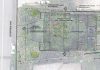
The arborist should assess the proposed construction rather than relying only on the final position shown on a plan.
A driveway that appears relatively minor on a drawing can create significant root disturbance if construction requires deep excavation.
Yes.
Retaining walls can affect trees through footing excavation, changes in soil level and alteration of drainage conditions.
Cutting into the existing ground may remove roots. Conversely, adding substantial fill over a root system can reduce oxygen availability and change soil conditions.
For this reason, an arborist considers both the wall itself and the proposed changes in ground level around it.
Sometimes moving a wall a relatively small distance or modifying its construction can substantially reduce tree impacts.
They can.
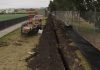
Stormwater, sewer, water, electrical and other services often require trenching. A narrow trench can sever roots across a much larger portion of the root system than its width may suggest.
Where important trees need to be retained, service routes should form part of the arboricultural review.
Alternative approaches may include:
Planning service locations early can avoid unnecessary conflicts later in the project.
Neighbouring trees can still influence development on your property.
A tree does not need to stand inside the site boundary for its roots or canopy to extend into the development area.
For this reason, an Arboricultural Impact Assessment may need to consider relevant trees close to the property boundary.
The location of the trunk, root protection requirements and proposed works all influence the assessment.
Importantly, development should not rely on removing or significantly damaging a neighbouring tree without the appropriate owner’s consent and approvals.
Tree protection areas provide a useful basis for assessment, but roots do not grow as perfect circles around a tree.
Their location can vary due to:
Where the location of roots could materially affect a design decision, an arborist may recommend a root investigation.
Non-destructive excavation techniques can help identify the location, size and distribution of roots before finalising construction details.
This can provide much better information than simply assuming where roots will occur.
Reliable tree locations are also important when assessing development impacts.
A small error in the mapped position of a tree can change its relationship with a proposed building, driveway or retaining wall.
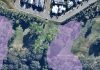
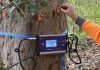
ArbCert uses professional GNSS tree mapping as part of our field assessment workflow. Under suitable conditions, our equipment can achieve positional accuracy down to approximately 30 cm.
This helps us compare tree locations with available survey and design information more accurately.
However, GNSS tree mapping does not replace registered survey information where certified boundaries or levels are required.
Often, relatively small changes made early in the design process can significantly improve tree retention.
Possible changes may include:
These options become much harder once architectural, engineering and civil designs are complete.
Therefore, involving an arborist early can give the project team more flexibility.
An Arboricultural Impact Assessment (AIA) is commonly used where proposed development may affect existing trees.
The assessment identifies relevant trees and considers their condition, significance and suitability for retention. It then evaluates the likely impacts of the proposed development.
An AIA can also recommend tree protection and construction measures where retained trees require specific management.
Council requirements vary between projects, so the required level of arboricultural documentation will depend on the site and proposed development.
The best time to consider trees is usually before the development design becomes fixed.
Early assessment can identify which trees represent genuine constraints and which interactions may be manageable through appropriate design.
It can also prevent unnecessary redesign later in the approval process.
Building near a tree does not automatically mean choosing between the development and the tree.
With accurate information and appropriate design, many projects can accommodate existing trees while still achieving the proposed development outcome.
ArbCert’s qualified consulting arborists prepare Arboricultural Impact Assessments and provide development advice to architects, designers, property owners and project teams. Our assessments combine professional arboricultural judgement with accurate spatial information to support practical development decisions.